October 27, 2025
The Art of Doing Nothing: Why Slowing Down Is Essential for Mental Health
The world has come to a point where it celebrates being constantly busy. Productivity is praised, calendars are filled to the brim, and the measure of worth is usually linked to how much one achieves in a day. Yet beneath all the noise, there is a quiet truth we forget to honour: rest is not a luxury, it is a necessity. The art of doing nothing is not about laziness or wasting time, but about allowing the mind and body to breathe.
In a culture that cites consistent output, many of us have forgotten how to pause. We keep moving from one commitment to the next, convinced that slowing down means falling behind. Yet in reality, the benefits of doing nothing are significant. Moments of stillness allow the nervous system to reset, creativity to return, and perspective to settle. It is in the pause that clarity emerges, and a simple mindfulness practice can make this awareness even more tangible.

Why does doing nothing feel so hard?
For many, the idea of sitting quietly without a task feels uncomfortable. There is a restlessness that comes with stillness, as if silence itself needs to be filled. Students might worry that time not spent revising is wasted. Young professionals frequently feel guilty for resting when colleagues are working late. The pressure to prove oneself is heavy, and it makes the simple act of being still seem indulgent.
This is where the deeper work begins. The discomfort with rest is not just about unused time, but about unspoken fears. To stop moving means confronting the thoughts and feelings that busyness often masks, that is, a challenge for anyone seeking mental health balance.
The pause between
Think of stillness as the pause between notes in a song. Without the pause, there is only noise. It is the silence that gives the music its rhythm. In the same way, allowing time for nothingness gives shape to our lives. By practising this, we begin to notice the small details that are mostly missed: the warmth of morning light, the rhythm of breath, the gentle release of tension in the shoulders.
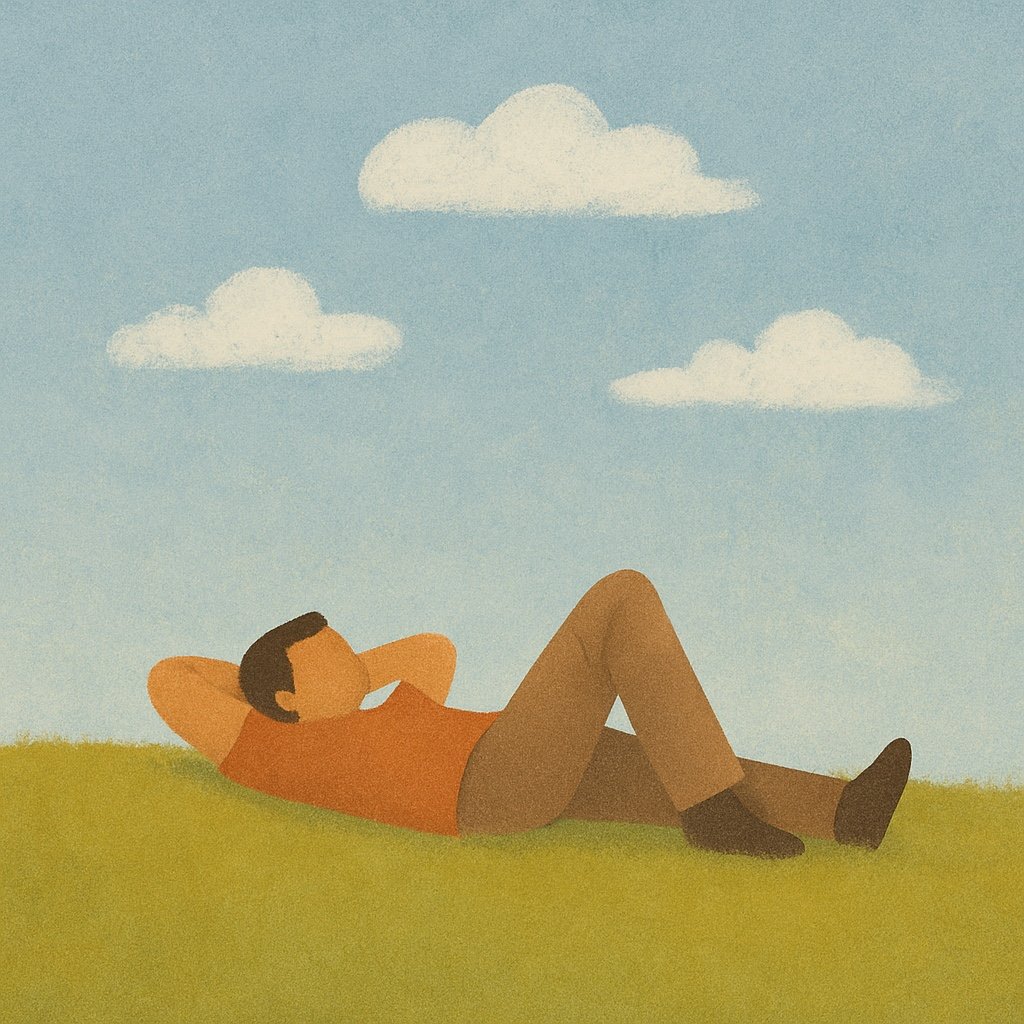
This kind of noticing is a form of mindfulness practice, but it does not need to take the shape of a structured exercise. Mindfulness without meditation can be as simple as lying on the grass and watching clouds, or drinking tea without checking your phone. These moments invite us back to ourselves without asking for performance or achievement.
Slowing down in study and work
For those in the middle of studies or the early stages of a career, the pressure to constantly perform can feel relentless. Slowing down feels countercultural, even dangerous, as though rest will erase progress. Yet slowing down in college or during a first job is not about neglecting responsibility. It is about creating enough space to sustain the journey. Burnout does not arrive overnight; it builds gradually when pauses are denied.
By permitting yourself to do nothing for a while, you are not falling behind. You are preserving the energy and clarity that will allow you to move forward with greater steadiness. Rest is not the opposite of productivity; it is what makes sustained productivity possible and supports long-term mental health balance.
The gifts of nothingness
The benefits of the art of doing nothing extend beyond rest. Creativity often sparks when the mind is free from constant input. Emotional resilience strengthens when there is space to process quietly instead of rushing from one demand to another. Relationships deepen when presence replaces distraction. And self-worth begins to separate from output, gently reminding us that value does not depend on how much we achieve, but on who we are in the quiet moments.
Philosopher Blaise Pascal once observed, “All of humanity’s problems stem from man’s inability to sit quietly in a room alone.” His words, centuries old, remain relevant today. Doing nothing is not a void to fear, but a space to inhabit.
Beginning small
The practice of doing nothing need not be grand or time-consuming. It can begin with five minutes of sitting quietly without reaching for a phone. It might look like turning off notifications during a walk, or lying in bed for a moment before rushing into the day. What matters is not the length of time, but the willingness to pause.
These small acts create ripples of ease. They begin to soften the constant demand for more, reminding us that stillness is not wasted but deeply restorative and essential for mental health balance.
A listening space for rest
At the Listening Room, we hold space for these pauses. This is a place where rest is valued, where silence is not awkward but welcomed, and where your story can live without the rush to fix or finish it. If you are navigating burnout, comparison, or the quiet ache of self-doubt, you do not need to carry it alone.
Because sometimes, the most powerful step is not another task, but learning the art of doing nothing. Let us listen together until rest begins to feel natural again.