Psychotherapy vs Counselling in Singapore: Which Is Right for You?
When you decide to seek help for your emotional well-being, one of the first choices you may face is whether to begin therapy or counselling. Both are designed to support mental health, yet the differences between them can feel confusing at first glance. Understanding what each approach entails can help you choose the kind of support that best suits your needs, especially as you begin exploring psychotherapy vs
counselling in Singapore and what each pathway can offer.
In Singapore, more people are seeking professional help than ever before. Whether you are struggling with anxiety, stress, loss, or simply a sense that something feels unbalanced, both psychotherapy and counselling provide safe, guided spaces to make sense of your thoughts and emotions. The question is not which is better, but which is right for where you are now.

Psychotherapy vs Counselling in Singapore
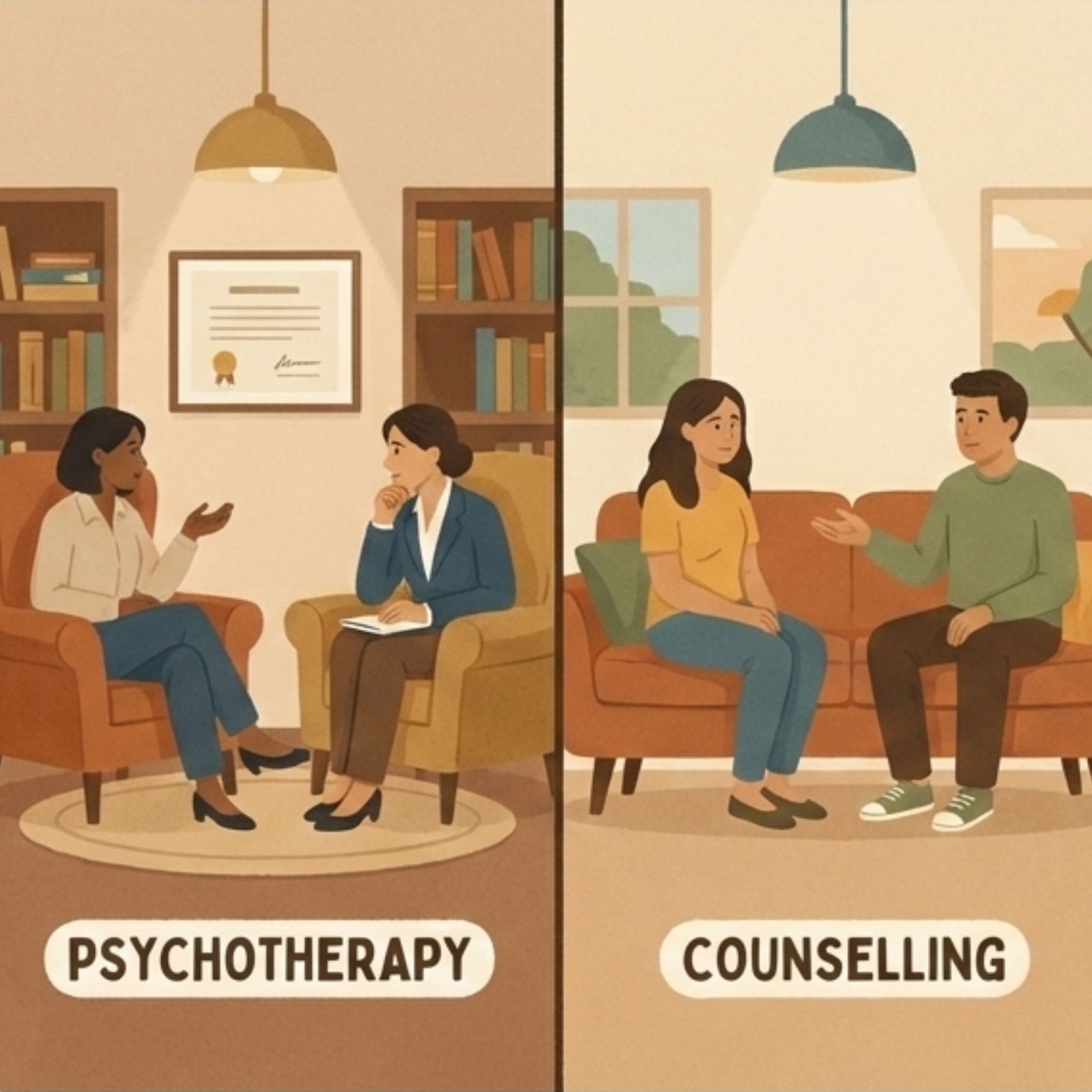
The terms psychotherapy and counselling are often used interchangeably, but the difference lies in the depth and focus of each approach. Both involve talking to a trained professional who helps you understand and manage emotional challenges. However, they differ in scope and structure.
Psychotherapy manages to explore patterns that have developed over time, tracing how past experiences shape your current behaviour and emotions. It aims to bring awareness to underlying issues and create lasting change through insight and understanding.
Counselling, on the other hand, usually focuses on specific concerns or quick challenges. It is more solution-oriented and practical, guiding you through strategies to manage difficulties in the present moment.
Both approaches can complement one another, and the line between them can sometimes become fluid. What matters most is the relationship you build with your therapist or counsellor and how that connection supports your progress.
Understanding the difference in approach
When exploring the difference between psychotherapy and counselling, it helps to think of counselling as a short to medium-term process, while psychotherapy is typically longer-term and more in-depth.
Counselling might help you navigate a recent breakup, a work-related challenge, or the stress of adjusting to change. Psychotherapy might be more suited if you are trying to understand repeated patterns in relationships, persistent low mood, or long-standing anxiety.
Neither is superior. The two approaches simply meet people at different stages of self-understanding. For some, counselling becomes a stepping stone to psychotherapy once they feel ready to explore deeper emotions and personal history.
How to know what you might need
If your primary concern is to find immediate relief, structure, or coping tools, counselling can be a supportive place to start. A counsellor helps you identify goals and work through practical steps toward improvement. This can be particularly helpful during times of transition or uncertainty.
If, however, you sense that your emotions are tied to past experiences or recurring situations, psychotherapy may be more helpful. A psychotherapist guides you through reflection and self-awareness, helping you uncover patterns that influence your present life.
Understanding your intention for therapy can make the choice more straightforward. You might ask yourself:
These questions are not tests, but gentle prompts to help you discover which form of help feels right for now.
The people behind the roles
In Singapore, you may come across different professional titles such as counsellor,
psychotherapist, psychologist, or clinical psychologist. Each has distinct training and qualifications, but all share the goal of supporting emotional well-being.
The discussion around psychologist vs counsellor is common, especially among those new to mental health support. Generally, psychologists are trained to conduct assessments, diagnose conditions, and apply evidence-based treatments. Counsellors and psychotherapists, while also highly trained, tend to focus more on conversation-based processes of change and self-understanding.
Accessing mental health counselling in Singapore
Access to
mental health counselling in Singapore has become increasingly diverse. Many private clinics, wellness centres, and community organisations now provide counselling services tailored to different age groups, cultural backgrounds, and emotional needs.
Sessions can take place face-to-face or online, providing flexibility for busy schedules.
Before beginning, it is perfectly fine to schedule an introductory session with a few professionals to see who feels right for you.
Choosing between counselling and psychotherapy
Deciding on a form of support is not about labelling your struggles as mild or severe. It is about finding the environment that best supports your growth. When choosing between counselling and psychotherapy, or even considering the differences you might notice between a psychologist and a counsellor in Singapore, think of the process as choosing the pace and depth of your healing rather than the method itself.
If you need immediate advice, counselling can help you stabilise and strengthen coping strategies. If you are ready to look deeper, psychotherapy can guide you toward long-term awareness and change. Both lead to the same goal of feeling more connected to yourself and better equipped to face life’s challenges.
How the process feels
In both counselling and psychotherapy, progress comes through consistency and trust. Some sessions may feel clear and constructive, while others stir emotions that take time to understand. It is all part of the process. The important thing is that you feel safe to speak freely and that your therapist listens with care and respect.
A space for clarity and confidence
Starting therapy or counselling is a personal decision that shows courage and self-awareness. Whether you choose to begin with short-term counselling or a deeper psychotherapeutic process, you are taking a step towards emotional clarity and growth.
We at
Listening Room create a space where the conversations are grounded, thoughtful, and personal. Every session is scheduled to help you find steadiness, make sense of your emotions, and feel more confident in your choices. Whether you are exploring options or ready to begin, this is a place where your story is met with understanding and care.